



Blue Clay Creatives
we create strategic content for businesses doing good in the world.
SPONSORED AD



August 16, 2023
Employee wellbeing has always been important – but now, companies are realising just how important. Not only can it have huge impacts on productivity within the workplace, but also employee retention, absenteeism levels and overall satisfaction.A few years ago, pre-COVID, workplace wellness was only visible in 10% of workplaces in the US – and even less in Australia. Yet the latest reports to emerge are signalling that workplace wellness is now present in more than 52% of US workplaces, and at an incredible 56% in Australian workplaces.But how many of these companies will keep up the focus as we come out of the COVID era and return to normal functioning? McKinsey research suggests that the focus on wellness – and so the benefits that come from that focus – might drop as the world focuses on getting back to ‘normal’ operations. This could result in a negative impact on workers' mental health.So, let’s dive in. What is workplace wellness? Why do we want it and how do we get it?
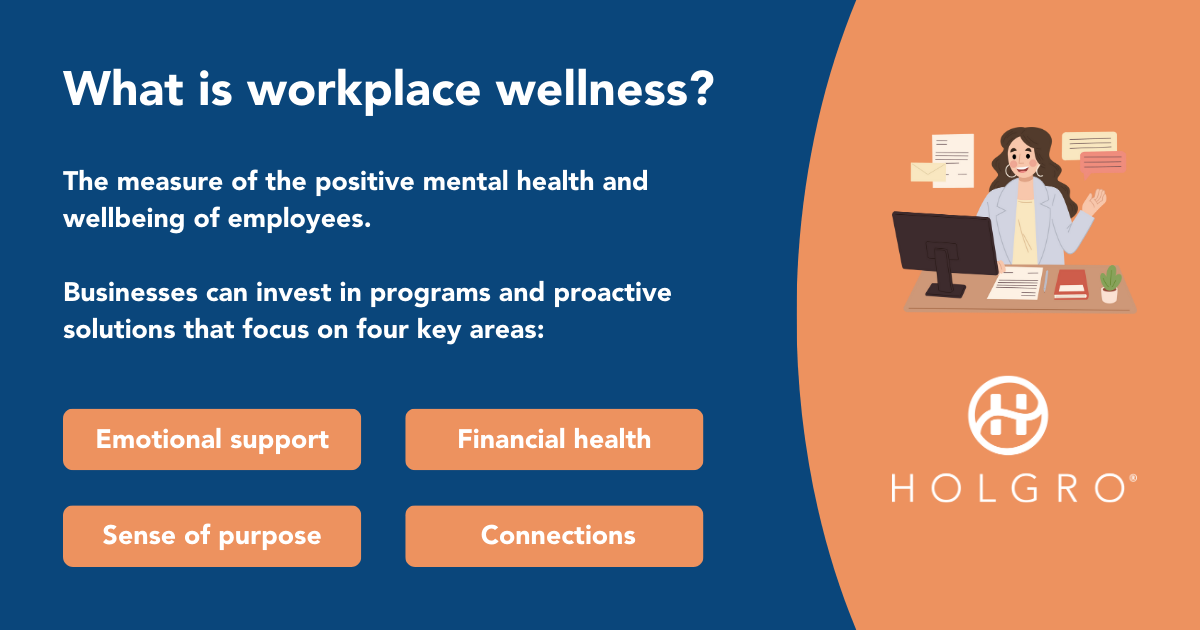
It’s simply the measure of the positive mental health and wellbeing of a business’ employees. But to achieve this, businesses have to invest in programs and proactive solutions to provide or support employee wellbeing. Generally these focus on four areas:
With the rise of remote working, as well as the new lens with which we have been examining our lives post-pandemic, employees now have greater concern for their own wellbeing. They’re craving better connections and purpose in their careers. They want more flexibility, a better work-life balance and more purpose in their day-to-day work lives.

Clearly, workplace wellbeing is important not only for employees but also employers. It can help staff to feel heard, seen and valued, as well as provide benefits like more sustained levels of engagement, higher performance, increased mental and physical health, and lower medical costs and absenteeism.Needless to say, if employees are feeling healthy, happy and driven (as opposed to stressed, sick or lacking motivation) they will be armed with the right tools to thrive in the workplace.This has many flow-on effects for businesses. They’ll benefit from fewer sick days (less absenteeism) and employees who are loyal tend to stick around, leading to better retention. They’ll also see increased efficiency from employees at work and a more positive work culture overall.This is particularly advantageous for employers in regional Australia, who might already find it tricky to attract and retain skilled, reliable workers. By focusing on workplace wellness, companies can embrace this as their point of difference and win the loyalty of valued workers.

There are many different approaches you could take to instill workplace wellness in the culture of your business. All it takes is asking – and truly listening to – what your employees want and need. Implement those solutions as much as you can. But be sure to find a way to regularly measure their ongoing satisfaction. This might be through surveys, feedback forms or group sessions.Some ideas for promoting workplace wellness in your business include:
Workplace wellness is an important part of all Australian businesses. Making this a priority in your business will help you have a stronger team, and achieve better results overall.

REGIONAL STORIES acknowledges the Traditional Custodians of country throughout Australia and their connections to land, sea and community. We pay our respect to their Elders past and present and extend that respect to all Aboriginal and Torres Strait Islander peoples today.

.svg)

.svg)