



Blue Clay Creatives
we create strategic content for businesses doing good in the world.
SPONSORED AD



November 18, 2025
10mins
TRIGGER WARNING: This story contains content that may be upsetting.
In the heart of Bundaberg, where sugarcane meets the Coral Coast and sea breezes roll across red soil, poet and advocate Rob Parr has built something rare — a bridge between creativity and the often unspoken world of men’s mental health.
The Untamed Mind Project wasn’t born in a clinic or a classroom. It came from survival.
“I’ve lived an interesting life,” Rob says softly. “Not one I’d wish on anyone else, but it’s made me who I am. Everything that’s happened — the good and the hard — has brought me here. It brought me to my poetry.”
Rob grew up the son of a single mum in regional Queensland, one of three boys with different fathers, moving through multiple schools and homes. His childhood was marked by instability, flashes of violence, and deep grief, including losing a stepfather, who went missing in Western Queensland and whose body was never recovered.
With his mother overwhelmed by trauma and loss, Rob and his brothers were placed into different homes while their mum tried to regroup.
One of those homes changed his life. Grazier Jimmy Sullivan and his family took Rob in and treated him as one of their own.
“What they did for me was incredibly generous,” Rob recalls.
Jimmy’s kindness became an anchor. When Jimmy died suddenly while Rob was a teenager, the grief and confusion were enormous. Writing slowly became his way of making sense of it.
“I am naturally an emotional human, and I really struggled to communicate,” he says. “Poetry became an outlet… a lifesource,.”
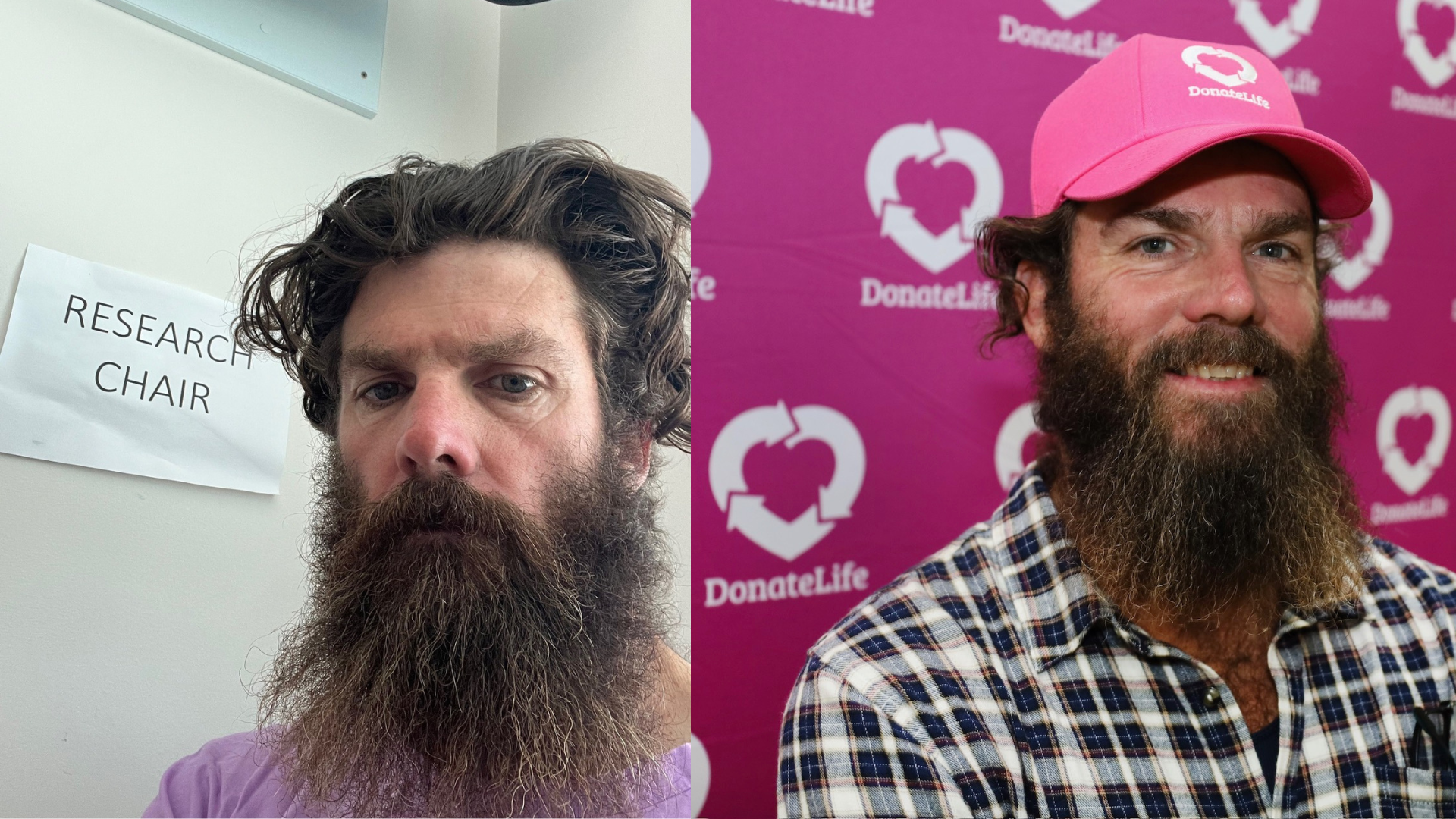
Around 19 years of age, another shattering experience reshaped his inner world: Rob was sexually abused while in a vulnerable situation he couldn’t escape.
“It affected every part of who I was,” he says. “As men, we’re told to be tough — to ‘man up.’ But no one tells you what to do when your body freezes. No one teaches you how to speak the truth without shame.”
The intrusive thoughts, depression and suicidal ideation that followed were crippling. Writing — getting the thoughts out of his head and onto a page — became his first real tool for managing them.
“I was just trying to manage what was happening inside me,” he says. “Through writing my thoughts down, I could control some of the negative feedback loops that drove my depression.”
Over time, those scribbles evolved into poetry. And, eventually, into a voice.
By the mid-1990s, Rob’s childhood was behind him, but the aftershocks weren’t. The farm was gone, money was tight, and he was trying to build a life from the ground up.
In 1994, he joined the Army Reserves.“The Army helped me find a kind of confidence I didn’t know I had,” he recalls. “It showed me I was capable — I just needed the right kind of teaching.”
The structure and training developed his leadership and resilience — but his internal battles didn’t vanish.
“That same period was when I really started struggling with depression,” he admits. “I was binge drinking, making destructive choices… trying to outrun what was going on inside my head.”
With debts still hanging over the family, Rob turned to earthmoving — a natural fit for a farm boy who knew machinery and soil.
“I worked hard, paid back what I could, and made sure Mum always had food and fuel money,” he says. “It wasn’t easy, but it gave me purpose when everything else felt uncertain.”
.png)
In August 2000, in Goondiwindi, he met Kelli, a music teacher from Bundaberg. Her quiet strength helped re-anchor him.
“Meeting her was the turning point,” Rob says. “She tempered my self-destructive side and gave me a reason to keep living. Kell helped me get my finances in order and, more importantly, helped me learn to look after myself — to put my wellbeing first.”
They married in 2003 and moved to Mount Isa for Kelli’s teaching role. Rob continued serving in the Army Reserves, eventually being promoted to Corporal, earning a Soldier of Merit medallion, shooting at AASAM, and joining patrols into the Gulf and remote North Queensland.
“I was learning leadership, discipline and teamwork,” he says. “Those lessons still guide me today.”
In 2006, Rob and Kell welcomed their first son, Eric, named after Rob’s father, with whom he had recently reconnected. Their second son, Alex, followed in 2008.
Back in Bundaberg, Rob completed an adult carpentry apprenticeship and began working toward his builder’s licence. With Kell and the boys beside him, he bought a farm of his own — a place he hoped would one day be his sons’ inheritance.
“That property was meant to be my gift to the boys,” he says. “Something solid. Something lasting.”
.png)
Not long into building his business and the farm, Rob’s health began to shift in ways he couldn’t ignore. Eventually, he was diagnosed with primary sclerosing cholangitis (PSC) - a chronic, progressive liver disease that causes inflammation and scarring of the bile ducts. As the ducts narrow and block, bile backs up, damaging the liver and often leading to cirrhosis and liver failure.
“PSC crept up on me,” Rob explains. “It slowly took away my strength, my work, my normal life. I couldn’t keep the building business going. My body just wouldn’t let me.”
There were repeated trips to the Royal Brisbane and Women’s Hospital, where specialists inserted stents into his bile ducts to keep them open. Each time a duct blocked, he was back in hospital with sepsis.
“There were so many trips to Brisbane,” he recalls. “Stent after stent. It became a pattern I couldn’t escape.”
As his body slowed, years of suppressed trauma rose to the surface.
“I had what you’d call a bit of a breakdown,” he says. “Depression hit hard. I went on medication and started seeing a psychologist — not just for the illness, but to finally deal with my childhood and the sexual abuse I’d carried alone for so long.”
In stark hospital corridors, surrounded by others fighting for their lives, his understanding of legacy shifted.
“Watching others suffer makes you reassess what matters,” he says. “All the material stuff we try to build — the land, the empire, the dream of leaving something behind — it doesn’t always matter. Our kids don’t always want what we want. But the creative things we leave… the things made from truth… that lasts.”
Unable to work as he once had and craving purpose, Rob turned back to the one thing that had always helped him survive: writing.
“I needed something to hold onto,” he says. “So I started gathering every scrap of poetry I’d written over the years. That’s how Ramblings of an Untamed Mind began — not as a book, but as a lifeline.”
.png)
In early 2024, Rob’s world shattered again. Within months, he underwent a liver transplant and lost his younger brother.
“Those two experiences stripped me bare again,” he says. “Losing my brother, then getting a second chance at life — I knew I couldn’t waste it. That’s when The Untamed Mind really began. I realised creativity wasn’t a hobby. It was my lifeline.”
Out of this season, The Untamed Mind Project began to form. Shaped by what Rob saw in the regional and rural men around him: isolation, silence, and a growing disconnect from themselves and each other. He wanted to offer something different. Not a lecture, not a service, but an experience — a room where men could sit safely, listen to real stories, and gently step into conversations they’d never felt invited into before.
What started as one man’s coping mechanism soon became a space for many, giving men and those who walk alongside them a chance to recognise themselves in shared experiences. And when they leave, they don’t just take home a book; they take home a catalyst… a simple, tangible starting point for reflection, honesty, and gratitude.
At its heart, the project is simple: gather men together, offer poetry and story as the doorway, and let connection grow from there.
“When we value the creative act, we create value in ourselves,” Rob says. “It doesn’t matter if it’s words, paint, music, or building something with your hands. Creativity gives us back our humanity.”
“And that’s exactly what happens in the room. Men see another man speak openly about art as a mental health tool. They hear stories and poems about struggle, resilience and the beauty of nature. And slowly, they begin to feel — more connected, more aware, and often quietly curious about exploring their own creativity.”
Through live readings, mental-health events and partnerships with organisations like Brave Brothers in Bundaberg, Rob has turned his personal healing into a shared experience.
“When I get up to read, I’m not trying to be a performer,” he says. “I’m just trying to be honest. Afterwards, men come up to me — tough blokes, farmers, veterans — and say, ‘That’s how I feel, mate. I just didn’t know how to say it.’ That’s when the healing starts.”
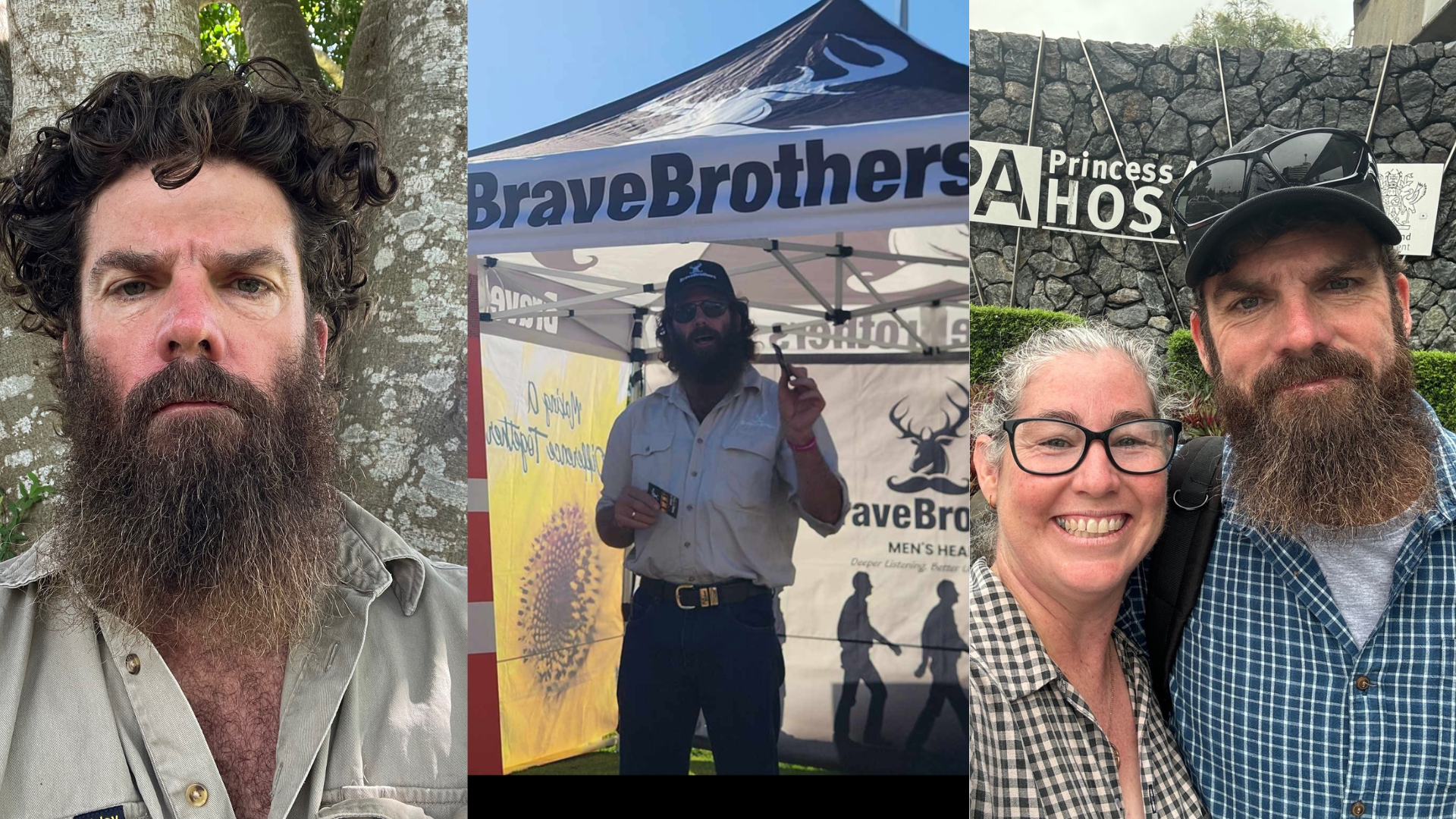
There’s no denying Rob’s life has been shaped by hardship, but each experience has deepened his empathy and sharpened his purpose. The Untamed Mind Project is built on a simple belief: sharing our stories helps us survive them.
“Pain and passion become purpose,” he reflects. “Everything I’ve been through now serves something bigger. If my story helps one person feel less alone, then it’s worth it.”
Through poetry, Rob has found a way to connect across age, background and geography — from regional sheds to city halls. But his heart remains with men from the bush, who often tie their worth to what they can physically do.
“When your value is measured by what you can lift or fix, what happens when you get sick, or retire, or break down?” he asks. “You start to think you don’t matter. But you do. Every man still has purpose — even when the tools are down.”
.png)
Looking forward, Rob wants to take The Untamed Mind Project into schools, helping boys see that creativity and emotion are not weaknesses, but strengths.
“If we want to make real change, we have to start with the kids,” he says. “Encourage them to write, to draw, to talk. My generation — it might be too late for some of us. But the next? There’s hope.”
Two new collections — Shadows of an Untamed Mind and Reflections of an Untamed Mind — are on the way, charting a journey from survival to gratitude, from darkness to grace.
Rob isn’t chasing fame or perfection. He’s chasing connection — one poem, one conversation, one untamed mind at a time.
“Creativity saved my life,” Rob says. “If it can save mine, maybe it can save someone else’s too.”
REGIONAL STORIES acknowledges the Traditional Custodians of country throughout Australia and their connections to land, sea and community. We pay our respect to their Elders past and present and extend that respect to all Aboriginal and Torres Strait Islander peoples today.

.svg)

.svg)