

Blue Clay Creatives
we create strategic content for businesses doing good in the world.
SPONSORED AD



October 24, 2025


Author’s Note
This story began as part of the documentary series You Can’t Do That in the Bush, which I created to uncover the extraordinary innovation, resilience, and creativity thriving in regional and remote Australia. When we filmed Plastic Fantastic — the pilot episode — I met Connor Clarke and Dennis Fay, two men born on opposite ends of the world, united by one urgent mission: to tackle the global plastic crisis from the water’s edge. What unfolded was not just a story about technology or environmental impact, but about human ingenuity, connection, and hope.
— Laticia Braving, Executive Producer, You Can’t Do That in the Bush
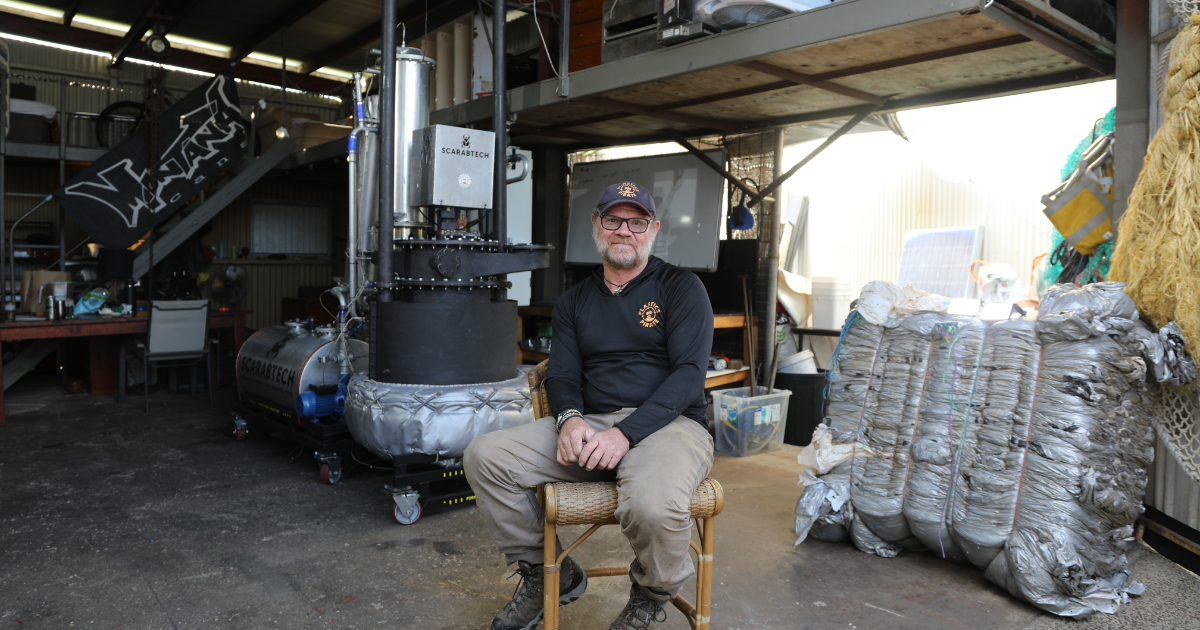
On a warm morning in Cairns, Far North Queensland, Australia, Connor Clarke stands beside a machine nicknamed the Beetle. Sitting inside a small industrial shed, it hums loudly as it works its magic.
Bags of sun-bleached rope and mangled fishing nets sit nearby—ghost nets, the most destructive litter in the sea. Connor lifts a length of it. “This net would weigh maybe 40 or 50 kilos,” he says. “Now imagine ten tonnes of this stuff. That would fill this shed three or four times over—encrusted with dead and dying marine animals.”
Connor is a paramedic by training and an ocean person by instinct. Years earlier, nursing in Madagascar, he’d seen how the lack of safe water and healthcare cascaded into daily suffering. He promised himself he’d work on those two problems. But living and working on the ocean gave him a third: plastic.
“People say ‘ban plastic’,” he says, eyes flinty. “I say plastic is fantastic—it is the most life-saving, game-changing material we’ve ever made. It’s our mismanagement that’s the problem.” He points at the Beetle. “This is one of the ways we fix the mismanagement.”
The Plastics Pirate approach (Connor’s for-purpose company) is disarmingly simple to explain: take plastic that’s doing damage—ghost nets and mixed marine debris—and turn it back into something useful.
“Plastic is fantastic…. It’s our mismanagement that’s the problem.”
A thousand kilometres to the north-east on Masig in the Torres Strait, Dennis Fay looks out over water that’s hard to believe could hold so much danger. Kids fish from the jetty, families gather on the beach, stoking fires to cook their fresh-caught fish and ‘crays’. From the air, it looks like paradise. But look closer at the tideline and along the shore, and the story quickly shifts focus.
“The Torres Strait is surrounded by the ocean. Growing up, it provided food, it provided work, and it also provided a sense of adventure for me,” says Dennis Fay, a local diver and entrepreneur. “With the ocean being so integrated into our livelihood, it was a very important part of the way and who we are as Torres Strait Islanders.”
The Torres Strait, known to its Traditional Owners as Zenadh Kes, is a narrow stretch of water between the tip of Australia’s Cape York Peninsula and the island of New Guinea. Scattered across this strait are more than 270 islands, though only 17 are permanently inhabited today. Each island has its own unique landscape — from sandy cays and volcanic peaks to mangrove flats and coral reefs — and together they support some of the richest marine ecosystems on earth. The Torres Strait Islanders, who are culturally and ethnically distinct from both Aboriginal Australians and neighbouring Papuans, have lived here for thousands of years, building a vibrant culture centred on the sea, storytelling, and community. While the 2016 census recorded just over 4,500 people living on the islands themselves, many more Torres Strait Islanders now live across mainland Australia, maintaining deep connections to their island homes.
And that livelihood is under siege. Since mass production began just six decades ago, humanity has created 8.3 billion tonnes of plastic. The Great Pacific Garbage Patch, located between Hawaii and California in the North Pacific Ocean, has expanded to an area of 1.6 million square kilometres, equivalent to twice the size of Texas. This vast accumulation of ocean plastic is not a solid mass but a dispersed zone of debris, primarily microplastics, held together by the rotating ocean currents of the North Pacific Subtropical Gyre.
And every year, between 8 and 11 million tonnes of plastic enter the ocean. And it will keep coming.
“That’s the scariest statistic for me,” says Clarke. “If you can imagine a garbage truck a minute unloading only plastic into the ocean, that puts it into perspective.”
For islanders like Dennis, the threat is more than statistics. “I’m a diver. I see this firsthand. We adventure across all the islands, and the uninhabited ones are the worst affected. Turtles mistake plastic for jellyfish. They choke and die. Ghost nets become a hazard to us, too, when we’re travelling between islands. We’re seafaring people. And when you see these nets tangled across reefs and beaches, it just doesn’t belong there.”
So why don’t they just pick up the marine debris and fish out the nets? Due to biosecurity rules, transporting contaminated marine debris to the mainland is not viable. Furthermore, the inherent volatility of sea conditions means that recovery operations are often too hazardous. So the mess that was created thousands of miles away, remains on their shores - and the problem keeps piling up. But it doesn’t have to anymore…
Clarke, a former paramedic, has spent much of his career in remote and dangerous environments. He knows plastic differently: not as rubbish, but as a lifesaving tool.
“There are a lot of people against plastic,” he says. “I’d say plastic is fantastic. Plastic is the most incredible, life-saving, game-changing material that mankind has ever produced or ever will produce. It’s our mismanagement of that resource that’s the problem.”
What keeps him up at night is what you can’t see at all. “Micro and nano-plastics have been shown to cross the blood–brain barrier,” he says quietly. “A fetus can absorb plastic from their mother. It’s multi-generational harm—from a single consumable.”
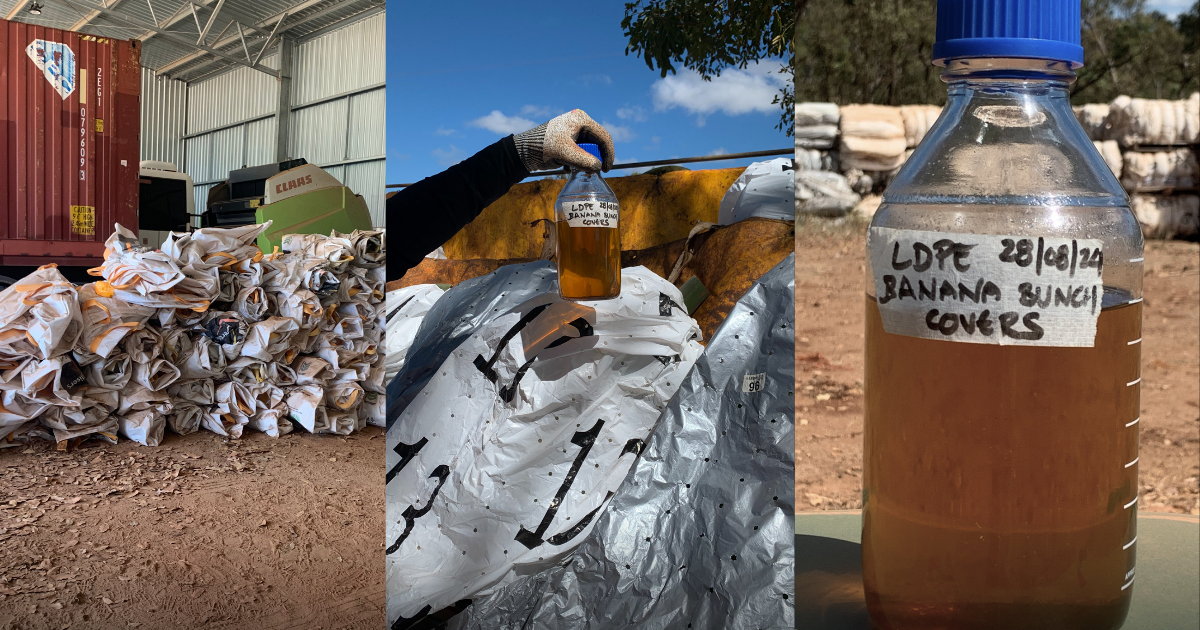
Clarke’s “fantastic” is not naïve optimism. It’s a bet on technology. His company has developed a modular portable system that can process plastic waste and allow for on-country solutions. From banana farm wrapping to ghost nets — his solutions can transform waste into usable fuel and building materials.
This is where Connor and Dennis’ visions lock in. “The big challenge is A: detect, B: locate, C: assess, D: extract, and E: then what?” Connor says. The “then what” is where Plastic Pirate’s kit earns its keep.
At the heart of his solution is his "Beetle," a state-of-the-art pyrolysis unit designed to transform plastic waste into fuel. By heating plastic to 500°C in an oxygen-free environment, the unit breaks down long polymer chains, vaporising the plastic and condensing it into usable fuel. Any non-condensable byproducts are safely cleaned and flared off.
This mobile pyrolysis unit can process approximately 500 kilograms of plastic daily, converting it into around 500 litres of fuel. It operates efficiently on four high-volume types of plastic while adhering to emissions guidelines. In remote areas where diesel is scarce or costly, the fuel produced by the Beetle can sustain operations, creating a closed-loop solution to waste and energy needs.
But the genius doesn’t stop there…
A second piece of equipment, the Melter, pre-heats ghost nets and ropes into a toothpaste-like consistency that can either feed the pyrolysis unit or be extruded into products like fence posts, building materials or products for circular recycling markets . ( dive fins.)probably not fins unfortunately
“This machine closes gaps immeasurably by providing your own fuel,” Clarke explains. “Processing material from the water takes fuel, and in remote areas that’s hard to get. Producing fuel onsite lets you keep going.
Our fuels have even achieved NATA accreditation to replace fossil fuels in virgin polymer production. It’s the epitome of the circular economy — the first time it’s really evidenced. Plastic made from plastic.”
(“In Dennis’s model, he’s making fins,” Clarke says. “To be able to extrude those into a profile on-island, in community, giving work to locals, clean beaches, and fins on the other side — that’s pretty significant.”) probably unachievable.
And then there’s the Processor 1, a 24-metre landing barge with a moon pool in its belly. Once a scallop vessel, it has been adapted to haul ghost nets through the hull, release any live animals, and triage the injured. It carries its own accommodation, winches, and ramp, designed to access reefs and beaches that few other craft can reach.
For Dennis, this technology isn’t just about the environment — it’s about opportunity.
“Connor will be able to come to the Torres Strait to set up a microfactory,” he says. “We could make products the community needs, create employment, and stay here on our island. We don’t have to leave to look for work. We can be home, doing great things, and cleaning up the environment at the same time.”
His organisation, Salty Monkeys, has already run a Marine Debris Task Force, funded by Marine Parks Australia and the Torres Strait Island Regional Council. Over two years, the team carried out beach cleans, collected data, and involved locals in building the knowledge base needed to tackle the issue sustainably. “Quality, quantitative data is critical,” Dennis says. “We need to know where the debris is coming from, what types, and how much. Then we can design solutions that actually last.”
.png)
One experiment involves repurposing discarded GPS trackers that wash ashore with fishing gear. By placing them back on ghost nets, Dennis hopes to track their movements and warn communities. “We’d like to throw some back out to understand the currents and flow,” he says. “That way we can target hotspots, recover nets, take hazards away — and then repurpose them.”
For both men, collaboration is non-negotiable. Clarke puts it bluntly:
“The partnerships we’re trying to create are an empowerment roadmap — a way that everybody gets to win in the game to save the planet. No one made a greater mistake than the person who did nothing because they could only do a little. Everyone has a part to play. We wrecked it. We’ve got to fix it.”
Dennis agrees. “I feel we’re all connected somehow. What we’re facing here is what people are facing throughout the whole world.”
From garbage trucks of plastic every minute to circular economies on remote islands, their work shows how global crises can be tackled with local ingenuity.
Plastic may be mankind’s most destructive invention. But if Clarke and Fay are right, it could also become one of our greatest chances at redemption.
Dennis says there’s a bigger picture - protecting his culture. “We’re seafaring people. Ghost nets aren’t just an environmental disaster; they’re a navigation hazard.
With partners like Resilient Q and Kangaroo (Tangaroa) Blue, we’re repurposing GPS beacons washed ashore—putting trackers back on nets, studying currents to find debris hotspots. It’s community science, culture and safety together.”
And always, culture. “We’re small communities with strong storytelling—song and dance that pass culture down the generations,” Dennis says. “The clean-up is not just rubbish removal; it’s caring for country and sea, so the stories can continue.”
“We’re seafaring people. Ghost nets aren’t just an environmental disaster; they’re a navigation hazard. "
.png)
If ghost nets and plastic debris are the visible crisis, microplastics are the invisible one. Defined as fragments up to five millimetres long, they are now inescapable. An estimated 10 to 40 million metric tonnes of these particles are released into the environment each year, and if current trends continue that figure could double by 2040. Most form when larger plastics break down, but some are deliberately added to everyday products such as paints, cleansers, and even toothpaste.
“Plastic never goes away – it just breaks down into finer and finer particles,” notes one researcher.
The health implications are only beginning to be understood, yet already concerning. Studies show microplastics can accumulate in human organs, including the brain and even blood clots, raising red flags about their links to inflammation, oxidative stress, cardiovascular disease, reproductive problems, and certain cancers. Exposure is constant — through the air we breathe, the water we drink, the food we eat, and even through skin contact. While official guidance still suggests current levels of ingestion are “unlikely to be harmful,” mounting evidence of cellular and systemic toxicity points to a more troubling reality.
At Stanford Medicine, researchers such as Juyong Brian Kim, MD, are investigating how microplastics and nanoplastics affect both animals and human cells. Early findings show that the particles can enter cells and alter gene expression, potentially accelerating vascular disease.
Children may be especially vulnerable. Kara Meister, MD, a pediatric surgeon at Stanford, noticed a troubling rise in thyroid cancer and autoimmune disease among young patients. In 2024, her team began examining tonsil tissue removed from children for routine conditions. The results were sobering: microplastics were present in a high proportion of samples, not just on the surface but deep within. In one child’s tonsils, specks of Teflon were visible under a microscope.
What scientists don’t yet know is almost as concerning as what they do: how long plastics remain in the body, whether certain types pose greater risks, and how genetics or environment influence outcomes. With plastic so pervasive, proving direct causation is difficult. But the early evidence is clear — microplastics are not just polluting oceans and reefs. They are finding their way into our bloodstreams, our organs, and our children’s bodies, making the case for urgent action impossible to ignore.
.png)
Connor doesn't blink when asked what drives him: “That's easy - to combine the three drivers—social, environmental, and economic—in that order. Social first, then environmental, and only then economic.”
What Plastic Pirate and Salty Monkeys are building together is a hands-on approach to a circular economy with real-world impact.
“Life-changing. Absolutely game-changing,” says Connor. “The fact that it’s funded by itself, funded by plastic, and that people get to be empowered with their own funds… every single person in that community works together, and that’s the concept.”
For Dennis, when talking about what “success” looks like, he paints a picture: young people working at home, elders teaching song and dance, clean beaches where tourists read a QR code on a boardwalk plank and learn whose hands made it. “We might be remote,” he says. “But through the ocean, we’re all connected. If people support us here, we can help everywhere.”
Both agree on one thing: do something. “No one made a greater mistake,” Connor says, “than the person who did nothing because they could only do a little.”
It’s also a coalition play. “From big fossil-fuel companies who can buy naphtha-comparable liquids to make new plastic, to agriculture, medical, wreckers, councils, and the people picking up on the beach—everyone has a role,” Connor says. “Collaboration is key. This isn’t the only solution, but it’s a powerful piece—especially in the remote where logistics kill good ideas.”
Dennis sees the same arc. “The benefit isn’t just environmental,” he says. “It’s people having a purpose, employment, skills, and reason to stay. It’s local manufacture that fits local needs, with data guiding each step so we don’t waste time or money.”
Both men are candid about the risks and realities: dangerous seas, biosecurity rules, heavy lifts, 6-knot currents that make diving impossible, 10-tonne nets you can’t just “drag out”. That’s why they’re trialling specialist recovery teams, long-range drones for detection, and sonar to assess what lies just under the chop.
Still, they return to first principles. “The elegance is that the system can fund itself,” Connor says. “The plastic funds the recovery which protects the reef that feeds the community which fuels the work. That’s circular—evidence of circularity you can put on a balance sheet and a dinner table. “We wrecked it, we’ve got to fix it. Everyone has a part to play.”
“We wrecked it, we’ve got to fix it. Everyone has a part to play.” — Connor Clarke
.png)
Join a clean-up or sponsor a debris transect with the Marine Debris Task Force.
Partner with innovators by supporting materials offtake — whether fuel, building profiles, or recycled products — or contribute detection technology like drones, sonar, or GPS beacons.
Bring the solution to your own coastline by piloting a ‘PirateHub’ micro-factory with Plastic Pirate and local stakeholders.
And if nothing else, learn before you act. Make informed choices. Reduce single-use. Share the story. Because every small action — every piece of plastic diverted from the sea, every person inspired to care — moves us closer to a world where plastic isn’t a curse, but part of the cure.
To see the PLASTIC FANTASTIC story come to life, watch the pilot episode of You Can’t Do That in the Bush — available to view now on YouTube.
REGIONAL STORIES acknowledges the Traditional Custodians of country throughout Australia and their connections to land, sea and community. We pay our respect to their Elders past and present and extend that respect to all Aboriginal and Torres Strait Islander peoples today.

.svg)

.svg)